
When Stress Shows Up in Your Belly: Understanding the Gut-Brain Connection

Have you ever had a stressful day and noticed that your stomach seems to know it before you do?
Maybe you suddenly lose your appetite. Maybe you feel bloated after a meal, your stomach feels unsettled, or you simply notice that digestion does not feel quite as comfortable as usual.
Stress does not always stay in your thoughts. Sometimes, your body feels it first — and your digestive system can be one of the places where those signals become noticeable.
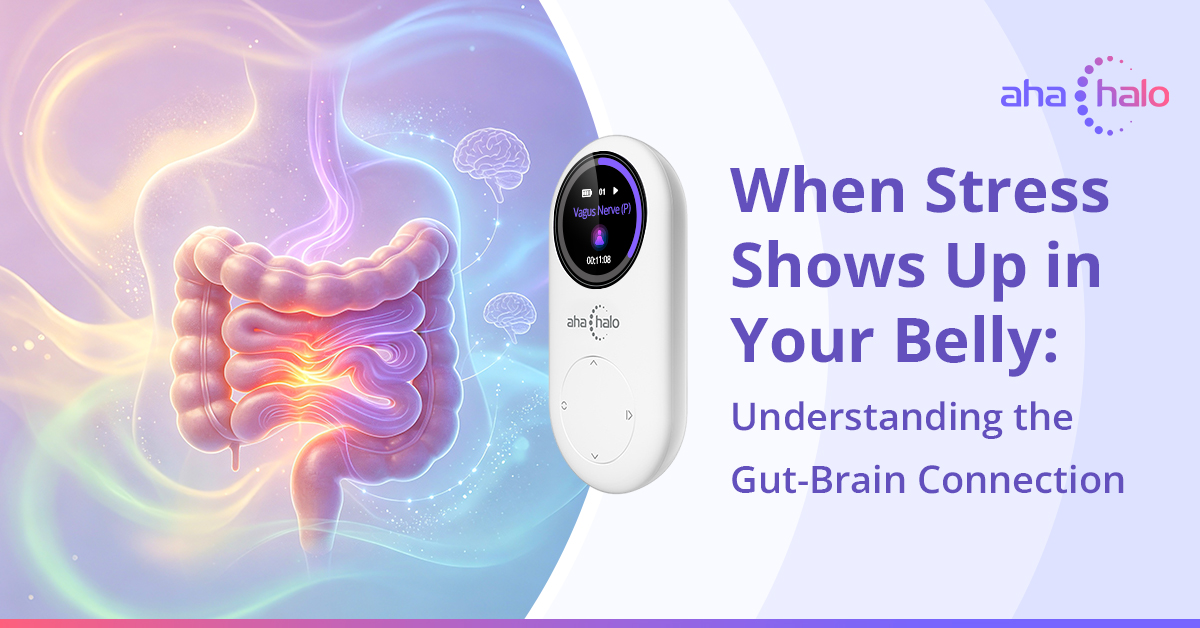
The gut-brain axis allows your brain and gut to communicate with each other. Understanding this relationship can help you see how everyday stress, eating habits, sleep, and emotional well-being can all affect how you feel.
Your Gut and Brain Are Always Talking

Your brain and digestive system are closely connected. What happens in one can affect the other. This connection is known as the gut-brain axis, which allows your brain and digestive system to communicate.
For example, when you feel nervous or stressed, you may notice changes in your appetite or digestion. The connection also works the other way: when your stomach feels uncomfortable, it can affect how you feel throughout the day.
Stress is not the only factor. What you eat, how well you sleep, how active you are, and your daily routine can all affect digestion.
Your brain and gut are closely connected, so taking care of both can be part of your everyday wellness routine.
Why Stress Can Show Up in Your Belly
When you experience stress, your body shifts into a more alert state.
Your heart rate may increase, your breathing may change, and your body becomes more prepared to respond to what is happening around you.
At the same time, digestion may become less of a priority while your body focuses on the immediate demands of the moment.
For some people, this may feel like an unsettled stomach, changes in appetite, bloating, or other temporary digestive discomfort.
And sometimes, it becomes a cycle. You feel stressed → your body becomes more alert → your stomach feels less comfortable → you become more aware of your digestion → and that discomfort adds another layer of stress.
Breaking that cycle does not necessarily require a complicated wellness routine. Sometimes, the first step is simply creating a little more space for your body to slow down.
Your Daily Habits Matter More Than You Think
Stress is only one factor. Your digestive system also responds to the everyday habits that surround your meals and your routine.
Eat With More Awareness
When life gets busy, it is easy to eat quickly while answering emails, watching a screen, or thinking about the next task.
Try giving your meals a little more attention. Slow down, take smaller bites, and allow yourself a few quiet minutes to actually enjoy your food.
Take a Short Walk After Meals
Gentle movement can be an easy way to transition out of meal time and back into your day.
A short, relaxed walk can also give you a chance to step away from your screen and create a natural pause.
Give Your Body Time to Wind Down
Your digestive routine does not exist separately from the rest of your lifestyle.
A busy evening, irregular sleep schedule, or constant mental stimulation can make it harder to create a sense of calm.
Simple habits such as dimming the lights, putting your phone away, taking a few slow breaths, or creating a consistent bedtime routine can help you transition into a more restful part of the day.
How Can Aha Halo Support Your Gut-Brain Wellness Routine?
This is also where Aha Halo can become part of your everyday wellness rhythm.
Designed as a portable wellness companion, Aha Halo offers programs that can fit naturally into moments of rest, relaxation, or personal reflection.
If digestive comfort is your main focus, Digestion (P) may be a natural place to start. Its program description focuses on supporting digestive enzyme activity and efficient nutrient breakdown.
For those who are more focused on everyday stomach comfort, Stomach Wellness (P) may fit into a routine centered around digestion and stomach balance.
And because stress and digestion can be connected, Vagus Nerve (P) may be worth exploring as part of a relaxation-focused routine. Its official description focuses on supporting gentle vagus nerve regulation, deeper relaxation, emotional ease, and whole-body harmony.
You do not need to use everything at once. Start with the area that feels most relevant to you. Keep your routine simple, pay attention to how you feel, and give yourself time to notice your own patterns.
Listening to Your Body Starts With the Small Things
Your stomach does not exist in isolation.
The way you eat, sleep, move, work, and respond to stress can all become part of the way your body feels throughout the day. That is why supporting digestion does not have to mean focusing only on food.
Sometimes, it can be as simple as slowing down for a meal, taking a short walk, getting enough rest, or giving yourself a few quiet moments when the day feels overwhelming.
Your body is constantly communicating with you.
The more you listen, the more you may begin to understand what it needs.
