The Modern Sitting Life: How It Changes Your Body
How many hours do you spend sitting each day?
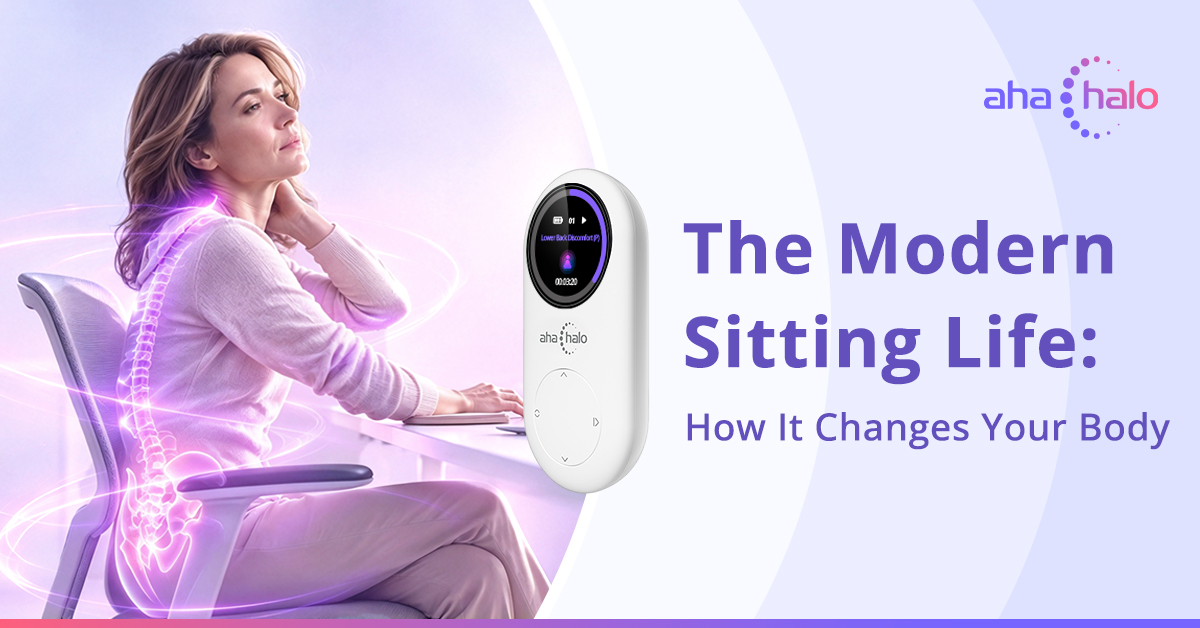
Sitting has quietly become a defining part of modern daily life. Many of us start the day at our desk, spend hours looking at screens, commute while seated, and unwind in the same position at the end of the day. While sitting is a natural part of life, spending too much time in one position can influence the way our bodies move and adapt over time.
In this article, let’s discover how modern sitting habits affect our bodies and how mindful habits, along with Aha Halo, can support greater balance and flexibility in your everyday routine.
When Sitting Becomes A Habit
Belly and Core: Reduced Engagement
The muscles around your abdomen, pelvis, and lower back make up your core, which plays an important role in supporting posture and everyday movement.
When sitting for extended periods, the hip joints remain in a flexed position, and the core muscles are less activated compared with activities that involve standing, walking, or other forms of movement.
Over time, prolonged sitting may increase reliance on passive support from surrounding structures, which can contribute to feelings of stiffness or reduced body awareness around the waist, hips, and lower back.
What to Do: Take regular movement breaks and add more variety to your daily posture and mobility patterns.
Legs and Hips: Lower-Body Stiffness
The lower body is one of the areas most influenced by prolonged sitting.
When seated for extended periods, the hips remain in a flexed position, while muscles around the hips and the back of the thighs experience reduced activation compared with standing or walking. The hamstrings remain in a shortened position when the hips and knees stay bent for long periods. The fascia surrounding the hips and thighs also responds to these movement patterns.
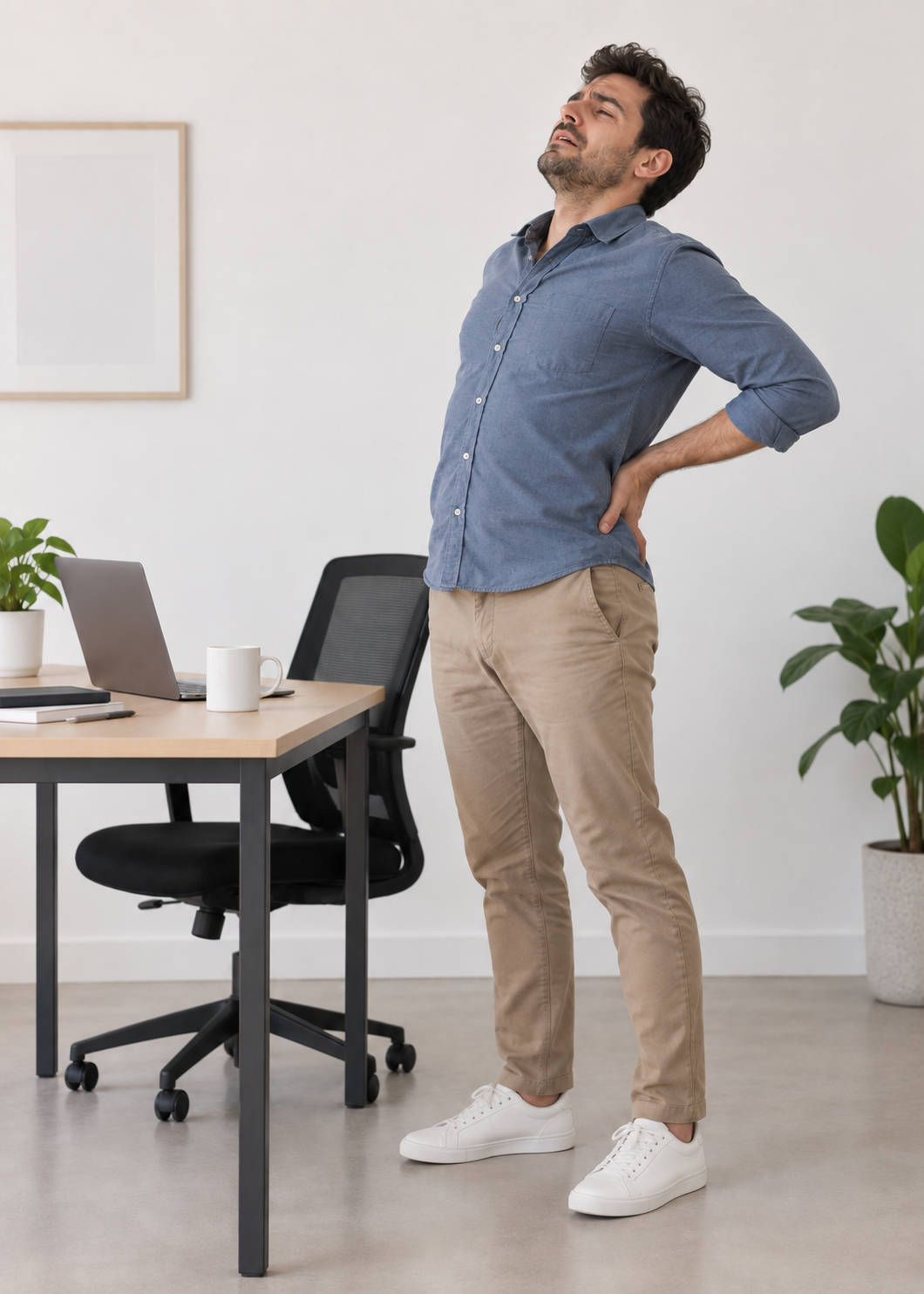
Over time, you may become more aware of stiffness, soreness, or discomfort when transitioning from sitting to standing.
What to Do: After sitting for extended periods, try introducing gentle movement before returning to daily activities. Stretching the hips and the back of the legs can help support flexibility and mobility. Simple ankle pumps, which involve gently moving your feet up and down, can encourage lower-leg muscle activity and support healthy blood circulation during periods of prolonged sitting.
Neck, Shoulders & Back: The Postural Toll
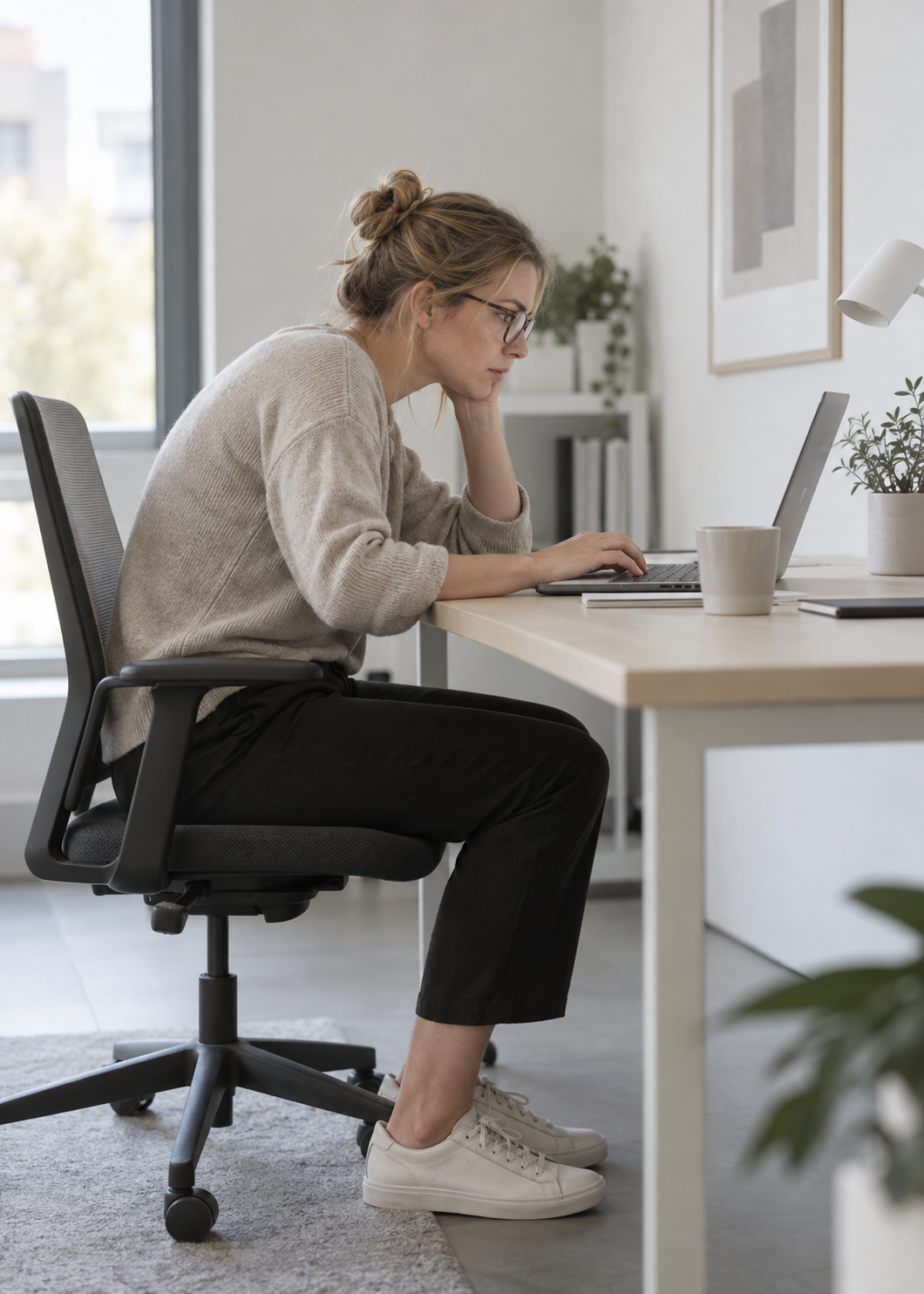
Hours spent at desks and in front of screens can gradually influence how we hold our bodies. Forward head positioning, rounded shoulders, and a slouched posture are common patterns during prolonged desk work, placing greater demands on the muscles around the neck, shoulders, and upper back.
At the same time, sitting for long periods reduces movement variety throughout the spine and surrounding tissues, which may contribute to feelings of stiffness or reduced mobility. Because the neck, shoulders, and back are connected through muscles, joints, and fascia, repeated postural habits can influence how the entire upper body feels.
What to Do: Take regular movement breaks that include gentle upper-body movements. When possible, support your posture with ergonomic adjustments, such as proper chair support or cushions that help you maintain a more comfortable sitting position.
Fascia: The Strain of a Sitting Lifestyle
Unlike individual muscles or joints, fascia is a continuous connective tissue network that surrounds and connects muscles, joints, and other structures throughout the body.
When we spend long periods in the same position, the fascia experiences less movement variety and fewer changes in tension. Over time, repetitive sitting patterns may influence how this connective network adapts, contributing to feelings of stiffness and reduced flexibility. Because fascia connects different areas of the body, limited movement in one region may also influence how other areas feel and move together.
What to Do: Introduce more movement variety into your day through regular posture changes, gentle stretching, and mobility exercises. Even small movements throughout the day can help support flexibility and body awareness.
Supporting Your Sitting Routine with Aha Halo
When sitting becomes an inevitable part of modern life, small daily practices can help you reconnect with your body and maintain everyday balance. Designed to be your portable wellness companion, Aha Halo programs are ready to complement your personal wellness routine and support your body through the challenges of a sitting-focused lifestyle.
Lower Back Discomfort (P)
Lower back discomfort is one of the most common experiences associated with prolonged sitting. The Lower Back Discomfort (P) program is designed to assist in easing tension from prolonged sitting or strain, supporting lower back comfort.
Shoulder and Neck Discomfort (P)
After long hours of sitting, you may notice your shoulders and neck feel more tense or less mobile. The Shoulder and Neck Discomfort (P) program is designed to support mobility and flexibility in these areas as part of a balanced daily wellness routine.
Fascial Support (P)
Every day, the fascial network responds to the demands we place on our bodies. The Fascial Support (P) program is designed to support fascial flexibility and help ease feelings of tension, promoting smoother movement and everyday comfort.
Ready to support your body through the challenges of modern sitting life? Explore Aha Halo below and discover a new way to support your wellness routine.