Wellness & lifestyle

Wake Up Well: Why Your First Hour Matters

Do you need a cup of coffee to “switch on” every morning?

For many people, the first moments after waking can feel like a slow restart. While coffee may be part of the morning ritual, your body already has its own natural wake-up process. During the first hour after waking, a series of changes begins quietly as your body shifts from sleep toward daytime activity.

That is why your first hour matters. In this article, we’ll explore the key factors that can influence your morning energy and how you feel throughout the day, along with simple ways to support this important transition.

Your Body’s Morning “Switch-On” Process

During sleep, your body follows a restorative night-time rhythm. When you wake up, these patterns begin to shift. Your internal body clock responds to environmental signals and coordinates changes that prepare you for daytime activity.

Cortisol is one part of this process. Although often associated with stress, cortisol also follows a natural daily rhythm and usually rises around the time you wake. This morning increase helps support alertness and readiness.

Your brain also needs time to fully transition out of sleep. This is why you may experience sleep inertia, the temporary grogginess, slower thinking, or heavy feeling that can linger after waking.

Several everyday signals can influence how smoothly this transition happens, including light, movement, hydration, food, and environmental stimulation. These factors may not determine your entire day, but becoming more aware of them can help support a steadier, more energized start and shape how you feel as the day unfolds.

What Matters in Your First Hour

Morning Light: The First Signal

Light is one of the strongest signals for your internal body clock.

Exposure to morning light helps your brain recognize that the night has ended. This also helps reinforce your sleep-wake rhythm and supports the shift toward daytime alertness.

If your morning begins in a dim indoor environment, that signal may be weaker. In contrast, opening the curtains, sitting near a bright window, or spending a few minutes outdoors can help your body recognize that it is time to become active.

You do not need an elaborate sunrise routine. Simply bringing more natural light into the beginning of your day can make your morning feel more defined.

Hydration: Replenish After Sleep

Several hours pass while you sleep without any fluid intake, and your body continues to lose water through breathing and normal physiological processes.

Even mild dehydration can affect how alert and comfortable you feel, making water a simple place to start if your mornings often feel sluggish. Rehydrating after waking helps restore fluid balance and supports circulation, temperature regulation, digestion, and other functions your body relies on throughout the day.

Coffee can still be part of your morning if you enjoy it. It simply does not have to be the first or only thing your body receives.

Breakfast: Fuel Your Day

Your body needs more than a glass of water to prepare for the day ahead. You may have heard the saying, "Eat breakfast like a king." While there is no single breakfast recipe that works for everyone, a balanced, nutrient-rich morning meal can help create a steadier foundation for your daily energy.

Rather than searching for the "perfect" breakfast, pay attention to how you feel after eating. Do you stay satisfied and focused for several hours, or do hunger and tiredness return quickly? Your own energy patterns can offer useful clues about what works best for your routine.

Gentle Movement: Wake Up Your Body

After a long night of relative stillness, gentle activity can help increase circulation and re-engage muscles that have been resting through the night. It can also help raise body temperature, another part of the body’s transition toward daytime activity.

There is no need to begin your morning with an intense workout. A few minutes of stretching, shoulder rolls, walking around the house, or stepping outside can be enough to help your body loosen up and ease into the day.

Morning Stimulation: Protect Your Attention

Your body is not the only thing waking up. Your attention is too. Has reaching for your phone to check messages, emails, or news updates become one of the first things you do each morning?

That sudden flow of information can quickly shift your mind into reacting, checking, and responding before you have fully settled into the day. You may already feel mentally busy within minutes of waking.

Creating a short gap between waking and checking your phone can give your mind a quieter start. Use that time for something else: drink some water, get natural light, move around, have breakfast, or simply think about what you want to focus on first.

Support Your Morning Rhythm with Aha Halo

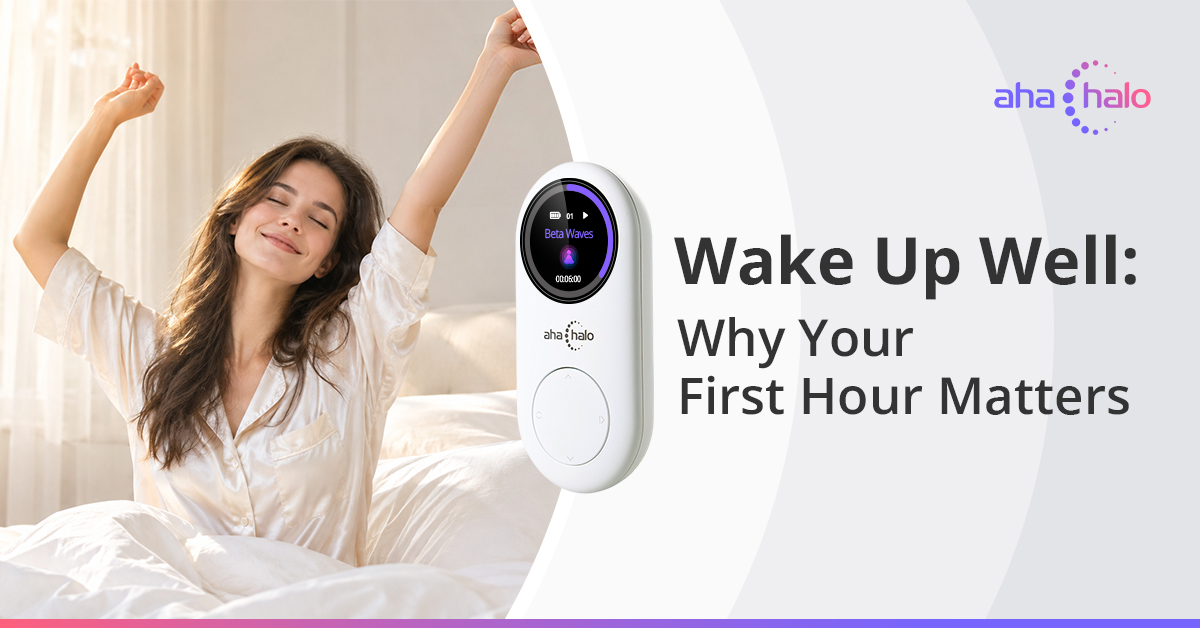
Your morning routine is also a chance to create the kind of energy you want to carry into the rest of the day. With restorative scalar energy technology and dedicated frequency programs, Aha Halo can fit naturally into this first hour as a simple wellness companion. Run a program in the background while you get ready, have breakfast, or head to work, and let Aha Halo be part of your morning rhythm.

Clarity and Focus

Designed to help organize scattered thoughts and support clearer focus, this program can help you begin the day feeling more centered, attentive, and mentally prepared.

Motivation

Sometimes, we just need a little extra “push” to get started. Motivation can be incorporated into your morning routine to support a more positive, engaged mindset and spark your inner drive for the day ahead.

Beta Waves

Beta brainwave activity is commonly associated with alertness, concentration, and active thinking. When you are preparing for tasks that require focus, learning, or sustained attention, try running this program in the background as part of your morning routine.

Your first hour matters. Want to create a more energized and engaged start to your day with Aha Halo? Discover more through the link below.

Leave a Reply

Your email address will not be published. Required fields are marked *