Wellness & lifestyle

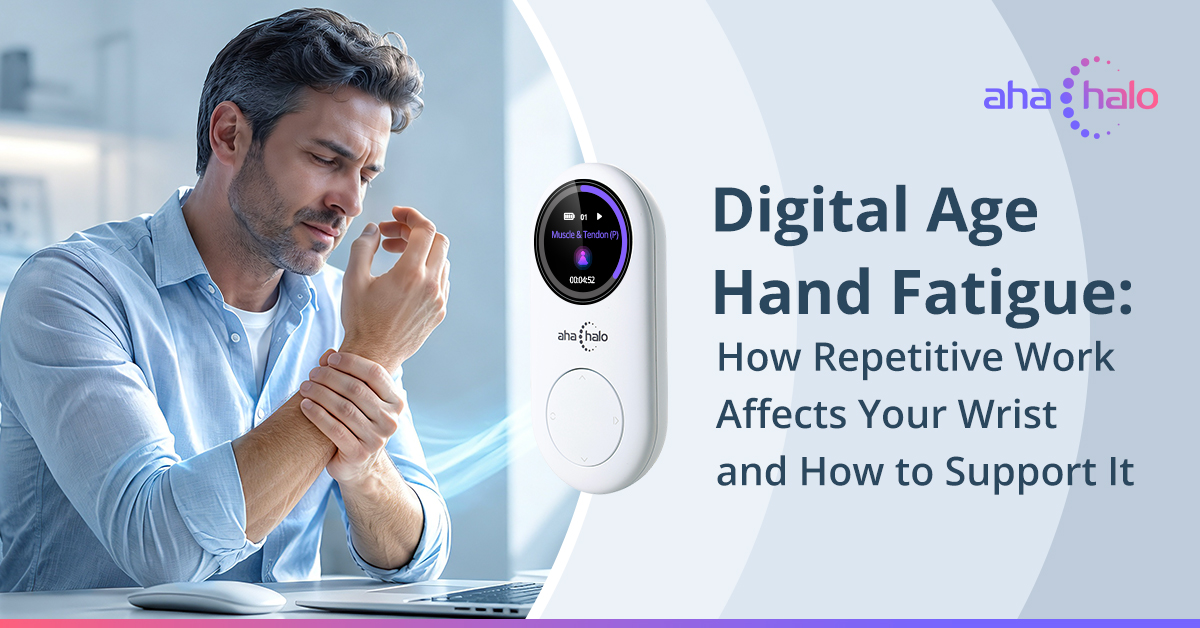
Digital Age Hand Fatigue: How Repetitive Work Affects Your Wrist and How to Support It

Have you ever finished a long workday and noticed your wrists feel tired, stiff, or less comfortable than usual? Our hands and wrists are working more than ever before.

From answering emails and typing reports to scrolling through phones, editing documents, and using digital devices throughout the day, many everyday activities now involve repeated hand and wrist movements.

While these actions may seem small, performing the same movements again and again can gradually create extra demand on the muscles, tendons, and nerves involved in hand movement.

Understanding how digital habits affect your hands can help you build simple routines that support comfort, balance, and long-term wellness.

Why Repetitive Digital Work Can Affect Your Wrists

Modern work has changed the way we use our bodies. Many people spend several hours each day:

  • Typing on a keyboard
  • Moving and clicking a mouse
  • Holding a smartphone
  • Using tablets or other handheld devices
  • Performing detailed hand movements for work or hobbies

These activities often require small, repeated motions rather than large movements. Over time, keeping the same posture or repeating the same action may leave your hands and wrists feeling tired, stiff, or less comfortable.

Your body is constantly adapting to your daily routine. When certain movements become part of your everyday pattern, your hands may need more opportunities for rest and recovery.

Understanding Wrist Discomfort in the Digital Age

One condition often discussed alongside repetitive wrist movements is carpal tunnel syndrome.

The carpal tunnel is a narrow passage in the wrist where the median nerve and tendons pass through. When this area becomes irritated or experiences increased pressure, some people may notice sensations such as tingling, numbness, weakness, or discomfort in the hand and fingers.

However, occasional hand fatigue does not always mean there is a serious issue. Many everyday factors — including posture, activity patterns, work habits, and recovery time — can influence how your hands feel.

The most important step is learning to notice your body’s signals and creating habits that support better daily comfort.

Simple Ways to Support Your Hands During Daily Work

Small adjustments throughout the day can help create a more comfortable relationship with technology.

Take Short Movement Breaks

Long periods of repetitive activity can make your hands feel tired. Try taking short breaks to relax your fingers, move your wrists gently, and change positions.

Even a few moments away from your keyboard or phone can help break up long periods of continuous movement.

Create a More Comfortable Workspace

Your setup can influence how your hands and wrists feel.

Consider:

  • Keeping your keyboard and mouse at a comfortable height
  • Avoiding prolonged wrist positions that feel strained
  • Adjusting your chair and desk setup for better overall posture   

A comfortable workspace supports not only your hands but your entire body during long workdays.

Add Gentle Hand and Wrist Movements
Simple movements can help you reconnect with your body:

  • Slowly open and close your hands
  • Stretch your fingers after extended typing
  • Rotate your wrists gently during breaks

The goal is not to add another complicated task, but to create small moments of awareness throughout your day.

Listen to Your Daily Patterns

Your hands often reflect your lifestyle.

Notice when your hands feel more tired — after long meetings, intensive computer work, gaming sessions, creative activities, or extended phone use.

Understanding these patterns can help you create a routine that better matches your needs.

How Can Aha Halo Support Your Hand and Wrist Wellness Routine?

Aha Halo can become part of your everyday wellness rhythm.

Designed as a portable wellness companion, Aha Halo offers a variety of programs that can fit into different personal wellness routines. Instead of adding another complicated step to your day, it can be used during quiet moments such as resting, stretching, journaling, or relaxing after work.

For those who spend long hours typing, using digital devices, or performing repetitive hand movements, several programs may naturally fit into a comfort-focused routine.

Nerve (P)

Nerve (P) may be explored as part of a wellness routine focused on supporting nerve-related comfort and balance.

Muscle and Tendon (P) 

Muscle and Tendon (P) may fit naturally for those looking to support muscle flexibility and recovery after daily activities or repeated movements.

Joint (P)

Joint (P) can be considered as part of a routine focused on maintaining comfortable movement and everyday mobility.

The key is not to use everything at once. Start with the program that matches your current wellness focus and create a simple routine that feels natural for you.

Finding Balance in a Digital World

Technology has become an important part of modern life. The goal is not to avoid digital tools, but to create a healthier balance with the way we use them.

Your hands support your work, creativity, and daily connections. Taking small moments to pause, move, and care for your body can help you stay more aware of what you need.

 In a world that asks us to do more every day, listening to your body may be one of the simplest ways to support your overall wellness.

Leave a Reply

Your email address will not be published. Required fields are marked *