
Your Inner Power Station: Mitochondria and Energy

Every heartbeat, movement, and body function depends on energy. But have you ever wondered how that energy is produced?
Much of the process happens inside your cells, where mitochondria help convert nutrients into ATP, the usable energy that powers cellular activity. That is why mitochondria are often called the body's inner powerhouse.
In this article, we’ll explore the connection between mitochondria and everyday energy, and look at the bigger picture of what helps support balanced daily energy levels.
From Food to Energy
The food you eat contains stored chemical energy, but your cells cannot use that energy directly. Carbohydrates, fats, and other nutrients need to be broken down and processed through digestion and metabolism.
Mitochondria play a central role in this process. They use energy derived from nutrients, together with oxygen, to help produce adenosine triphosphate, or ATP, the main form of usable energy that cells rely on to carry out their work. A simple way to picture it is:
Nutrients = Fuel
Mitochondria = Power Plants
ATP = Usable Energy
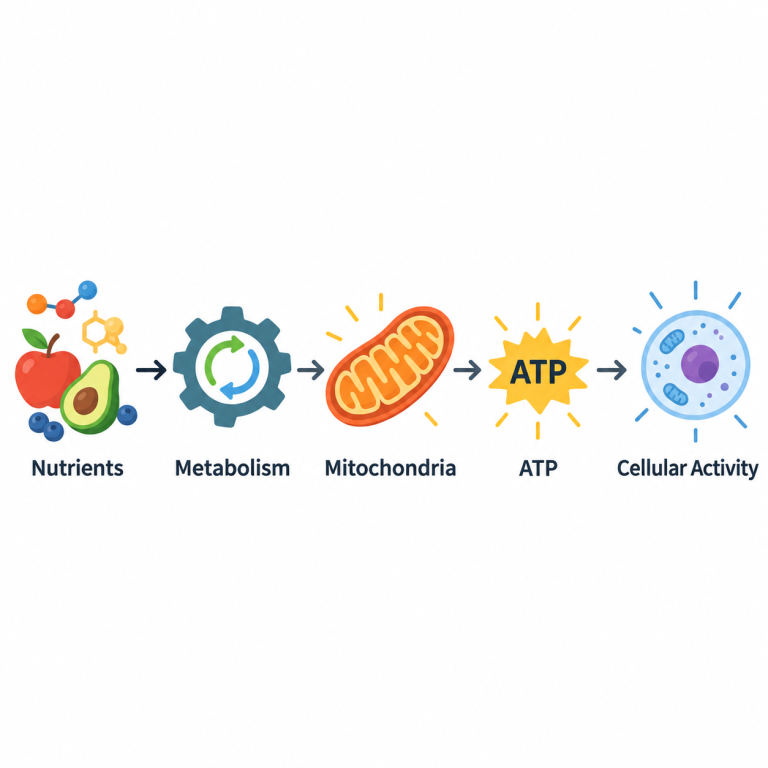
Your body uses ATP constantly. Muscles need it to contract, the brain needs it to support electrical signaling and cellular activity, and the heart depends on a continuous energy supply to keep beating. Cells also use ATP to transport molecules, build proteins, maintain their internal environment, and support everyday repair and renewal.
This is why tissues with high energy demands, such as the heart, brain, and muscles, contain large numbers of mitochondria.
Mitochondria are not the only factor that influences how energetic you feel, but they are a fundamental part of how your body produces and manages energy at the cellular level.
Supporting Everyday Energy from the Mitochondria Up
Mitochondria are dynamic. They respond to the demands you place on your body, which means everyday habits can influence how your cells manage energy over time. Supporting everyday energy is therefore less about finding a quick boost and more about creating consistent conditions for healthy cellular function.
Regular Movement
When muscles repeatedly need more energy, especially during aerobic activity, the body can adapt by changing mitochondrial content and function. Walking, cycling, swimming, jogging, and other sustained activities increase cellular energy demand and help muscles adapt to that demand.
Sleep and Daily Rhythm
Many aspects of energy metabolism follow daily biological rhythms. Your circadian rhythm, which helps coordinate sleep, hormone activity, body temperature, and metabolism, is closely connected with these processes. Consistent sleep and regular daylight exposure help reinforce your natural daily rhythm.
Nutrition
Your cells need carbohydrates, fats, proteins, vitamins, and other nutrients to support normal functions. Eating a varied, balanced diet helps provide the building blocks involved in producing usable cellular energy.
Recovery
Periods of activity also need to be balanced with adequate rest and recovery. This gives muscles and other tissues time to recover and adapt to repeated energy demands.
Explore Cellular Energy with Aha Halo
Aha Halo offers frequency-based programs designed to support cellular activity, energy balance, and overall wellbeing. To bring Aha Halo into your daily wellness routine, simply place it nearby and experience the gentle presence of its unique scalar energy field around you.
Cell (P)
Centered on cellular wellness, Cell (P) is designed to support normal cellular activity, renewal, and the body's natural repair processes as part of everyday wellbeing.
Metabolism (P)
Designed to support the natural rhythm of energy conversion, this program helps encourage metabolic balance and everyday adaptability.
Vitamin and Mineral
Vitamins and minerals play essential roles in many biological processes, including those involved in energy metabolism and cellular function. The program is designed to complement a balanced lifestyle by supporting the body's overall nutritional and energetic balance.
Your body is constantly converting nutrients into usable cellular energy, with mitochondria playing a central role in that process. Sleep, movement, nutrition, metabolic health, and daily rhythms all work together to shape how your body produces and uses energy.
So the next time you think about “having more energy,” it may be worth looking beyond another cup of coffee.
Want to explore Aha Halo for your wellness routine? Follow the link below to learn more.
