
Why Travel Throws Your Body Off More Than You Think — and How to Support It Along the Way


Travel is supposed to feel exciting. But even when the trip is enjoyable, your body may tell a different story.
You arrive feeling tired but wired. Your sleep is off. Your digestion feels strange. Your shoulders and neck are tight. Your mind is foggy. And sometimes, even after you get home, it still feels like your system has not fully caught up.
This happens more often than people realize. Travel does not just change your location. It changes your light exposure, sleep timing, meal timing, hydration, movement, and stress load all at once. That is a lot for the body to adapt to in a short period of time. Jet lag is part of it, but it is rarely the whole picture.
Travel disrupts more than your schedule
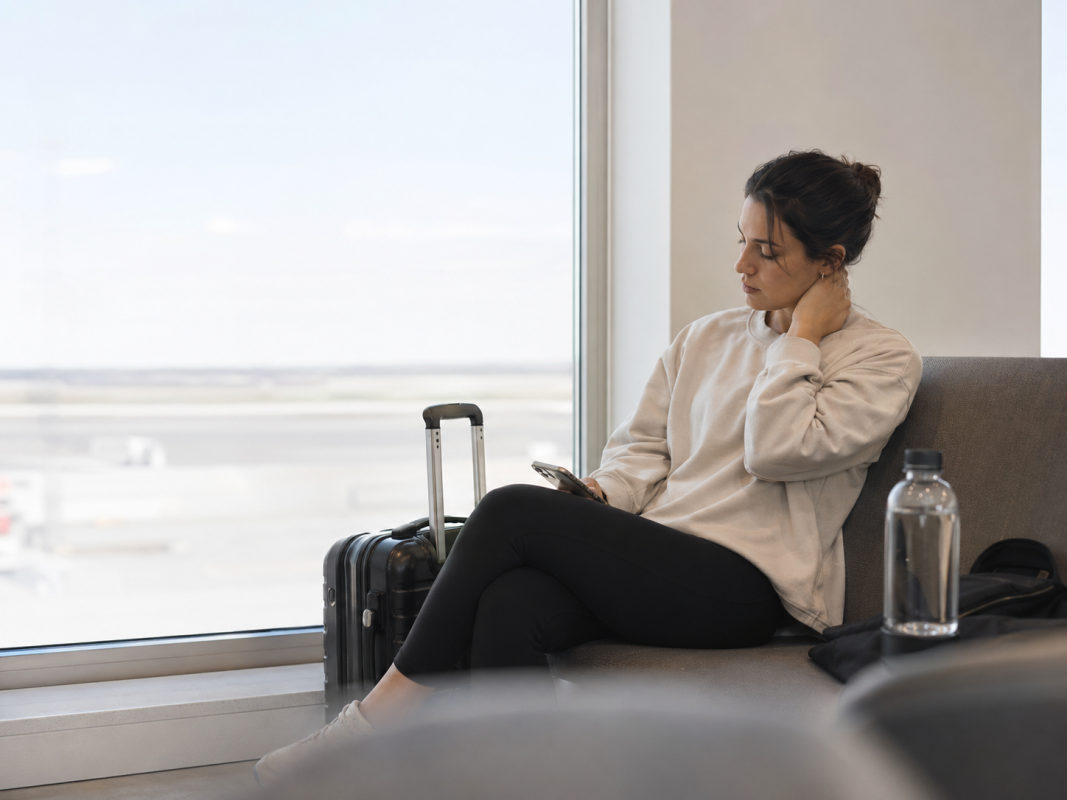
Your body runs on rhythm. It relies on internal timing cues to help regulate sleep, alertness, digestion, hormones, and energy. When you travel across time zones, that timing gets disrupted. Even if you are only away for a few days, your body may still be trying to figure out when to feel awake, when to rest, and how to settle into the new environment.
But travel can throw you off even without major jet lag. Early flights, long drives, unfamiliar beds, airport stress, irregular meals, dehydration, and hours of sitting can all add up. That is why a trip can leave you feeling strangely unlike yourself, even when nothing is technically “wrong.”
Why sleep is often the first thing to go
Sleep tends to be the first system people notice. You may feel sleepy at the wrong time, wake too early, or lie in bed tired but unable to fully settle. That happens because your body clock responds strongly to light and routine. Once those cues shift, sleep often shifts with them.
And when sleep gets thrown off, other things usually follow. Your mood may feel less steady. Your stress tolerance may shrink. Focus may feel harder. Recovery feels slower. One restless night while traveling can affect far more than your energy the next morning.
Why digestion can feel weird on the road
A lot of travelers notice bloating, sluggish digestion, irregularity, or that general feeling of being “off” in the stomach. It is easy to blame one meal, but it is often more than that.
Your digestive system also works on rhythm. Meal timing, sleep timing, hydration, and movement all shape how well it functions. So when you eat at odd hours, sit for long periods, drink less water, and sleep differently, digestion may slow down or become unpredictable.
This is one reason travel can feel so uncomfortable. The body is trying to process a new pattern before it has had time to settle into it.
Why the body feels tense, even during a vacation
Travel can be restful in theory but demanding in practice. Your body may be sitting still, but your nervous system is often doing a lot. You are navigating unfamiliar places, managing timing, carrying bags, sleeping in a different space, and staying slightly more alert than usual.
That low-level stress adds up. So does physical immobility. Hours of sitting can leave muscles stiff, circulation sluggish, and the whole body feeling heavy. This is why travel tension often shows up in the neck, shoulders, back, hips, and legs. Even after the trip ends, the body may still be carrying that “in transit” feeling.
What helps: simple training practices that support recovery
The best support is usually not extreme. It is consistent, simple, and easy for the body to understand.
Start with light exposure. Get outside in the morning when possible, especially after a flight. Morning daylight helps remind the body what time it is and can support a smoother rhythm reset.
Then add gentle movement. You do not need an intense workout right after traveling. A short walk, calf raises, shoulder rolls, spinal twists, and a few minutes of stretching can go a long way. The goal is to help the body feel circulation and movement again.
It also helps to calm the nervous system directly. One easy practice is slow breathing: inhale through the nose for four, exhale for six, and repeat for two to five minutes. That longer exhale can help the body shift out of tension and into a more settled state.
Hydration matters too. So does getting back to a normal local mealtime as soon as you can. These are small signals, but together they help tell your body, “This is where we are now.”
Where Aha Halo can fit in
For people who want something portable and easy to work into a travel routine, Aha Halo can be a helpful companion along the way.
Pineal Gland (P) is especially relevant when travel has thrown off your body clock. It is a natural choice for times when sleep timing, mental clarity, and inner rhythm all feel slightly out of sync.
Relaxation (P) is a strong fit for the tension side of travel. When the body feels overstimulated, tight, restless, or unable to fully settle, this is often the most intuitive place to start.
Chronic Fatigue (P) may be worth exploring when the trip is over but your energy still feels unusually low. Not just sleepy, but deeply drained. The kind of fatigue that lingers longer than expected and makes recovery feel slower.

You do not need to overcomplicate it. In many cases, it helps to start with the pattern that feels most obvious. If your rhythm feels off, begin there. If your body feels wound up, support that first. If the biggest issue is post-travel depletion, focus on that.
The goal is not a perfect trip. It is a better recovery
Travel will probably always challenge the body a little. That is normal. It does not mean you are fragile. It means your system is responsive and trying to adapt.
Once you understand that, the strange mix of fatigue, tension, brain fog, digestive discomfort, and sleep disruption starts to make more sense. Your body is not overreacting. It is recalibrating.
And that is often the most helpful mindset to keep in mind while traveling and after you return: support the rhythm, support the nervous system, support recovery. The more clearly you do that, the easier it becomes to feel like yourself again.
For more wellness tips, shared experiences, and helpful updates, we’d love to have you join our Facebook group.
