
What’s Inside the Joint Discomfort (P) Program? The Thoughtful Design Behind Aha Halo’s Peptide Programs

When people think about joint discomfort, it is easy to imagine one simple issue: a stiff knee, a sore shoulder, tight fingers, or a joint that does not move as freely as it used to.
But in the body, joint discomfort is rarely just one thing.
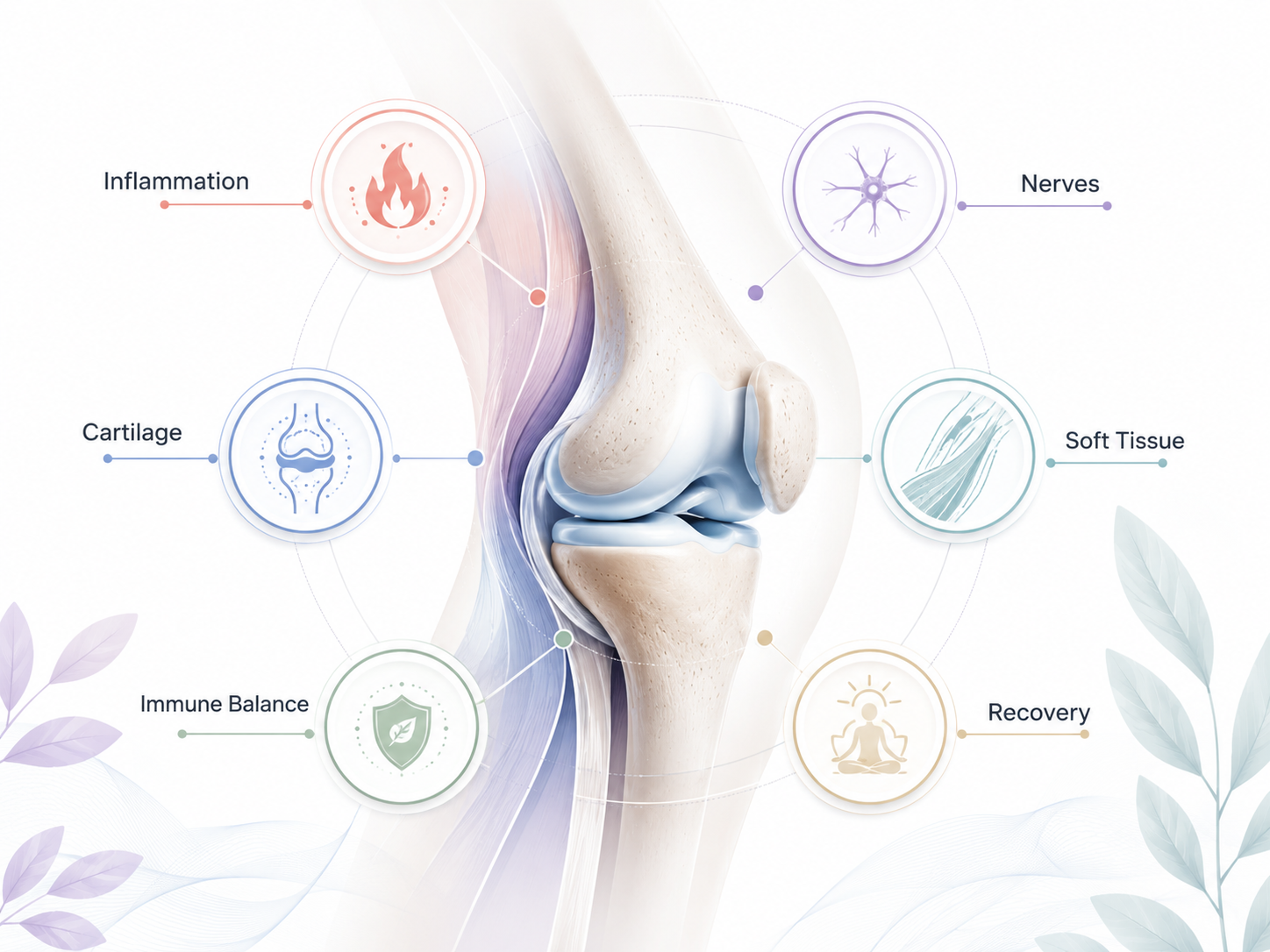
It can involve inflammation, nerve sensitivity, tissue stress, cartilage support, immune balance, circulation, old injury patterns, scar-like tissue buildup, and even the way the body manages cellular energy. That is why the Aha Halo Joint Discomfort (P) program is not designed around a single frequency. It is built as a multi-layered peptide frequency program, with each component selected to support a different part of the joint comfort picture.
Why a Multi-Frequency Approach Matters
A joint does not exist in isolation. It is surrounded by cartilage, tendons, ligaments, muscles, nerves, blood vessels, connective tissue, and immune activity. When discomfort appears, the body may be asking for support on several levels at once.
This is the idea behind Aha Halo’s peptide programs: the name of the program stays simple for the user, but the design behind it is more complete.
In a live discussion, John explained that Joint Discomfort (P) includes multiple peptide frequencies, and each one is designed to support a different factor related to joint discomfort. This is an important point. The program is not simply “one frequency for joints.” It is a thoughtfully built support protocol.
Layer 1: Supporting a Healthier Inflammatory Response
One of the first layers in the Joint Discomfort (P) program focuses on inflammation.
Annexin_A1_Ac2-26 helps joint pain by promoting the natural resolution of inflammation rather than just blocking it. It signals the body to clear out inflammatory cells and switch joint tissues from a damaged, swollen state to a healing state. By helping inflammation turn off properly, it can reduce ongoing joint swelling, decrease pain signals, and support the return to normal joint function without suppressing the immune system entirely.
This matters because inflammation is not always “bad.” The body uses inflammation as part of its natural repair process. The challenge is when the inflammatory process does not resolve properly and the joint stays irritated for too long.
Layer 2: Calming Pain Sensitivity and Stress Pathways
Joint discomfort is also connected to the nervous system. Stress pathways can amplify pain signals, making the joint feel more sensitive even when the physical issue has not changed.
Catestatin helps joint pain by calming an overactive sympathetic nervous system, which often amplifies chronic pain signals. When stress pathways are too active, they can increase inflammation and make joints more sensitive to pain. By modulating these nerve signals, Catestatin helps lower pain perception, improve blood flow to joint tissues, and reduce the stress-related flare-ups that worsen joint discomfort.
Cortistatin eases joint pain by dampening overactive communication between the nervous and endocrine systems that can amplify pain and inflammation. It helps suppress stress-related neuroendocrine signals that sensitize joints to pain and drive inflammatory cycles. By calming these pathways, Cortistatin may lower joint sensitivity, reduce neurogenic inflammation, and improve comfort in chronic pain conditions affecting the joints.
Together, these frequencies speak to an important idea: joint comfort is not only structural. It is also neurological.
Layer 3: Cellular Energy and Cartilage Protection
Joints require energy to maintain and repair themselves. Cartilage-producing cells, connective tissue cells, and surrounding tissues all rely on healthy cellular function.
Elamipretide supports joint health by stabilizing mitochondria, the energy centers inside joint cells like cartilage-producing chondrocytes. When these energy systems work better, cells can maintain and repair joint tissues more effectively while producing fewer damaging free radicals. By protecting joint cells from metabolic stress and energy failure, Elamipretide helps slow cartilage breakdown and reduce pain associated with joint degeneration.
This layer focuses on the deeper cellular environment. When cells have better energy support, they are better positioned to maintain tissue integrity and participate in repair.
Layer 4: Immune Balance and Antimicrobial Defense
The immune system also plays a role in joint comfort. In some cases, immune overactivity or microbial triggers may contribute to joint inflammation and discomfort.
Human Beta-Defensin 3 helps protect joints by strengthening the body’s innate antimicrobial defenses at barrier surfaces. Low-grade infections or microbial triggers can sometimes activate immune responses that lead to joint inflammation and pain. By enhancing the natural antimicrobial barrier, this peptide helps prevent immune activation that contributes to joint swelling and discomfort, particularly in vulnerable or compromised tissues.
Thymosin alpha 1 helps joint pain by restoring balanced immune function through support of the thymus and T-cell development. In autoimmune or chronic inflammatory joint conditions, an overactive or misdirected immune system can attack joint tissues. By promoting healthier immune regulation, Thymosin alpha 1 helps reduce inappropriate immune attacks on joints, lowering inflammation and associated pain over time.
This part of the program reflects a broader wellness principle: comfort and recovery often depend on a balanced immune response, not simply less immune activity.
Layer 5: Tissue Repair, Flexibility, and Structural Support
Joint comfort also depends on the quality of the surrounding tissue environment. Stiffness, scar-like tissue, and weakened connective tissue can all affect how a joint feels during movement.
P144 addresses joint pain by blocking signals that drive fibrosis, or excessive scar-like tissue formation, in and around joints. When fibrosis builds up, it can stiffen joint capsules, limit movement, and create painful tension in surrounding tissues. By inhibiting these pro-fibrotic pathways, P144 helps preserve joint flexibility, reduce tissue tightening, and alleviate pain caused by abnormal scar tissue accumulation.
Thymosin_beta_4 supports joint repair by regulating actin, a key protein that helps cells move, change shape, and rebuild damaged structures. In joints, this can enhance the migration and activity of cells needed to heal cartilage, synovial lining, and connective tissues. By promoting more efficient tissue regeneration and reducing the persistence of damaged areas, Thymosin_beta_4 helps reduce pain and improve joint recovery after injury or wear.
RADA16 helps joint pain by forming a nanofiber scaffold that mimics natural tissue structure, providing temporary support for cell repair and regeneration. When injected or applied near damaged joint areas, this matrix can guide healing cells to the right location and create a favorable environment for cartilage and connective tissue repair. By supporting structural healing, RADA16 helps restore joint integrity and reduce pain from tissue degeneration or injury.
KLD-12 addresses joint pain by mimicking components of the extracellular matrix, the supportive network that surrounds and nourishes joint cells. This peptide helps recreate the physical and chemical cues that joint tissues need to maintain themselves and repair damage. By providing this supportive environment, KLD-12 may encourage healthier cartilage and connective tissue, potentially slowing degeneration and reducing pain associated with joint wear.
Layer 6: Oxidative Stress and Iron Balance
Another thoughtful part of this program is its attention to oxidative stress.
Rusfertide helps joint pain by regulating iron levels in the body, since excess iron can accumulate in joints and promote oxidative stress and inflammation. Iron-driven damage can accelerate cartilage breakdown and sensitize joint nerves to pain. By maintaining balanced iron homeostasis, Rusfertide may reduce iron-mediated joint inflammation, protect tissues from oxidative damage, and support longer-term joint comfort and function.
This adds another layer to the program’s design: joint comfort is not only about the joint surface, but also about the biochemical environment around the tissue.
The Bigger Picture: Simple to Use, Carefully Built
The Joint Discomfort (P) program shows what makes Aha Halo’s peptide programs different. The user sees one program name. Behind that name is a carefully selected group of frequencies designed to support multiple related pathways.
The simplicity is on the user side. The thoughtful design is behind the program.
That is the larger idea behind Aha Halo’s program library. Each program is created with purpose, so users can explore wellness support without needing to manually build complex frequency combinations themselves.
How to Use Joint Discomfort (P) in a Wellness Routine
Joint Discomfort (P) can be explored as part of a daily comfort-support routine. Many users may choose to pair it with hydration, gentle movement, stretching, rest, and consistency over time.
As with any Aha Halo program, it can be helpful to observe how your body responds and avoid changing too many variables at once. A steady routine is often easier to understand than constantly switching programs.

Can the AHA device be placed directly on the joint which is painful?
Yes, you can place Aha Halo near or directly on the painful joint if it feels comfortable.
Aha Halo’s supportive scalar field extends about 3 ft / 1 m in all directions, so direct contact is not required. You can also keep it beside you or close to the area during the program.
Où trouver soulagement des douleurs articulaires ? Est-il déja pré enregistré quand on reçoit l’appareil ou faut il aller le chercher dans la bibliothèque avec l’ordinateur ?
Merci pour votre réponse
Bonjour 😊
Le programme s’appelle Joint Discomfort (P) en anglais, et il se trouve dans la catégorie Comfort (P) de la bibliothèque des programmes Peptide.
Il peut déjà être préchargé sur certains appareils, selon les programmes installés au départ. Si vous ne le voyez pas directement sur votre Aha Halo, vous devrez connecter l’appareil à votre ordinateur, ouvrir le logiciel Aha, puis le charger depuis la bibliothèque de programmes.
Si vous ne le trouvez toujours pas, essayez de mettre à jour le logiciel, ou contactez-nous à support@ahaharmony.com avec une capture d’écran.