
Hair Loss, Hormones, and Summer Scalp Care: A Gentle Guide for Healthier-Looking Hair

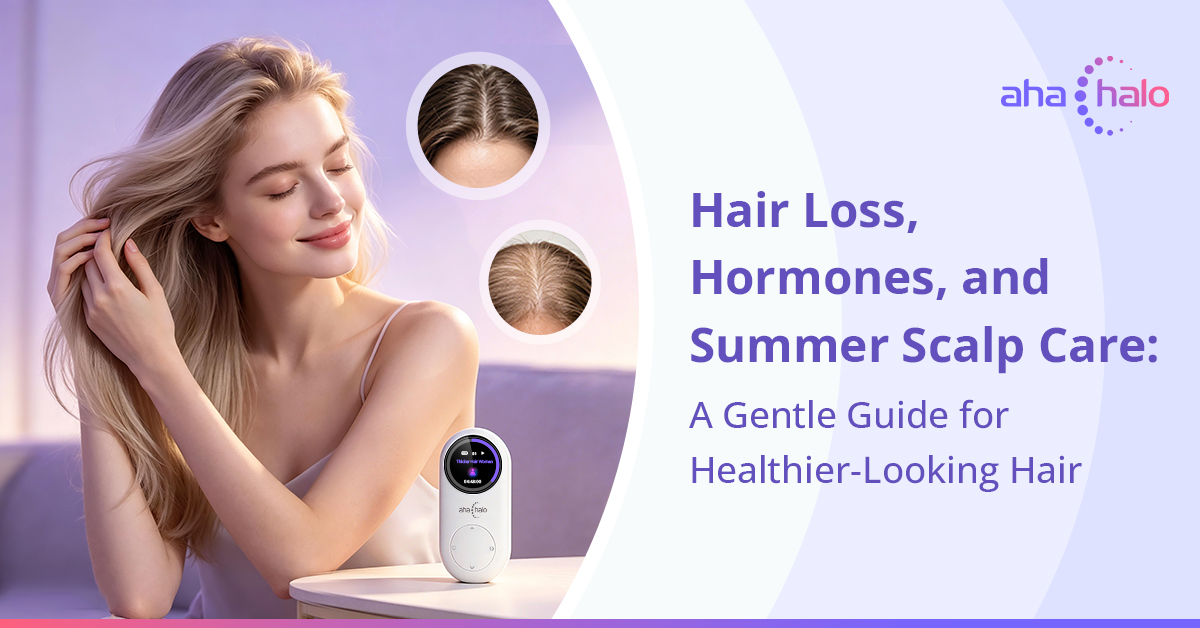
Hair loss has been part of the human story for a very long time.
Across cultures and generations, people have searched for ways to keep their hair looking full, strong, and healthy. And while hair thinning is extremely common, it can still feel personal. You may notice more hair in the shower drain, a wider part, a receding hairline, a thinner ponytail, or more scalp showing under bright light. Even small changes can affect how you feel when you look in the mirror.
The first thing to know is this: hair thinning does not always mean something is “wrong” with you. Hair can change with age, hormones, stress, health conditions, medications, nutrition, styling habits, and seasonal factors. The key is understanding what may be influencing your hair, then building a supportive routine that is realistic and consistent.
Why Hair Loss Happens
Hair grows in cycles. Each hair follicle moves through phases of growth, transition, rest, and shedding. It is normal to lose some hair every day. The concern begins when shedding becomes excessive, hair density noticeably changes, or hair does not seem to grow back as fully as before.
Common causes of hair loss can include heredity, hormonal changes, medical conditions, aging, emotional or physical stress, and certain treatments or medications. Hair loss can also appear in different patterns. Some people experience gradual thinning on top of the head, while others may notice patchy areas, sudden shedding, or thinning related to repeated tension from hairstyles.
Because the causes can vary, persistent or sudden hair loss should always be discussed with a qualified healthcare professional. This is especially important if hair loss is sudden, patchy, painful, accompanied by scalp irritation, or connected to other symptoms.
How Hair Thinning Often Looks Different in Men and Women
Men and women can both experience pattern hair loss, but the way it appears is often different.
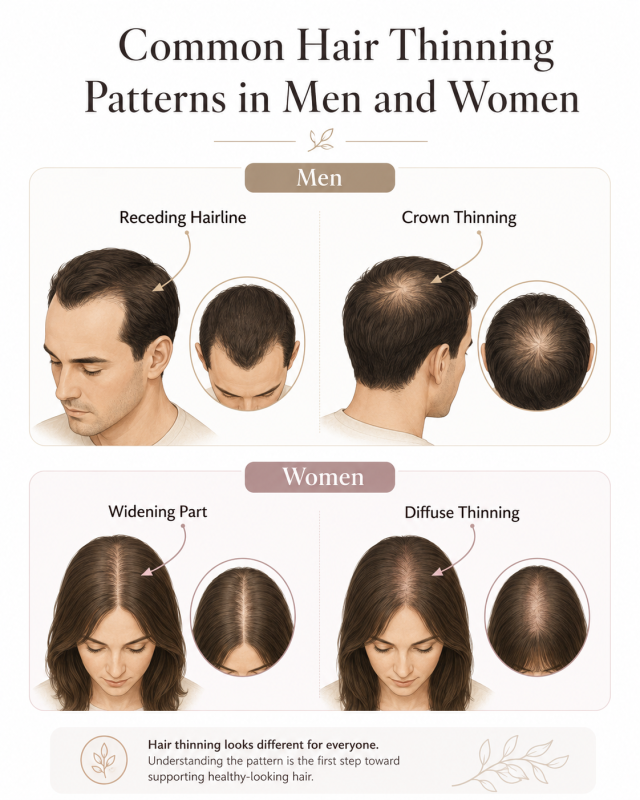
For many men, hair thinning commonly begins at the hairline or the crown. A receding hairline, thinning at the top of the head, or a gradually expanding bald area may become more noticeable over time. Genetics and hormone-related sensitivity often play an important role.
For many women, hair thinning is more likely to appear as reduced density along the part line or across the top-central scalp. Instead of a sharply receding hairline, women may notice that their hair feels less full overall, their part looks wider, or styling takes more effort than before.
Women may also experience hair changes during major hormonal transitions, such as after childbirth, during perimenopause, or around menopause. Men may notice more gradual changes related to aging and inherited hair patterns.
The difference is not simply “men lose hair and women shed hair.” Both can experience shedding, thinning, and pattern changes. But the visual pattern and timing often differ, which is why support routines should feel personal rather than one-size-fits-all.
Summer Scalp and Hair Care: Why the Season Matters
Summer can be beautiful, but it can also be tough on the scalp and hair.
Sun exposure, sweat, heat, pool chlorine, ocean salt, frequent washing, and tight hairstyles can all affect how your scalp feels and how your hair looks. A sweaty scalp may feel itchy or oily. Dry ends may become more fragile. Sun exposure can also make the scalp more sensitive, especially in areas where hair is already thinning.
Simple summer hair and scalp care can make a meaningful difference:
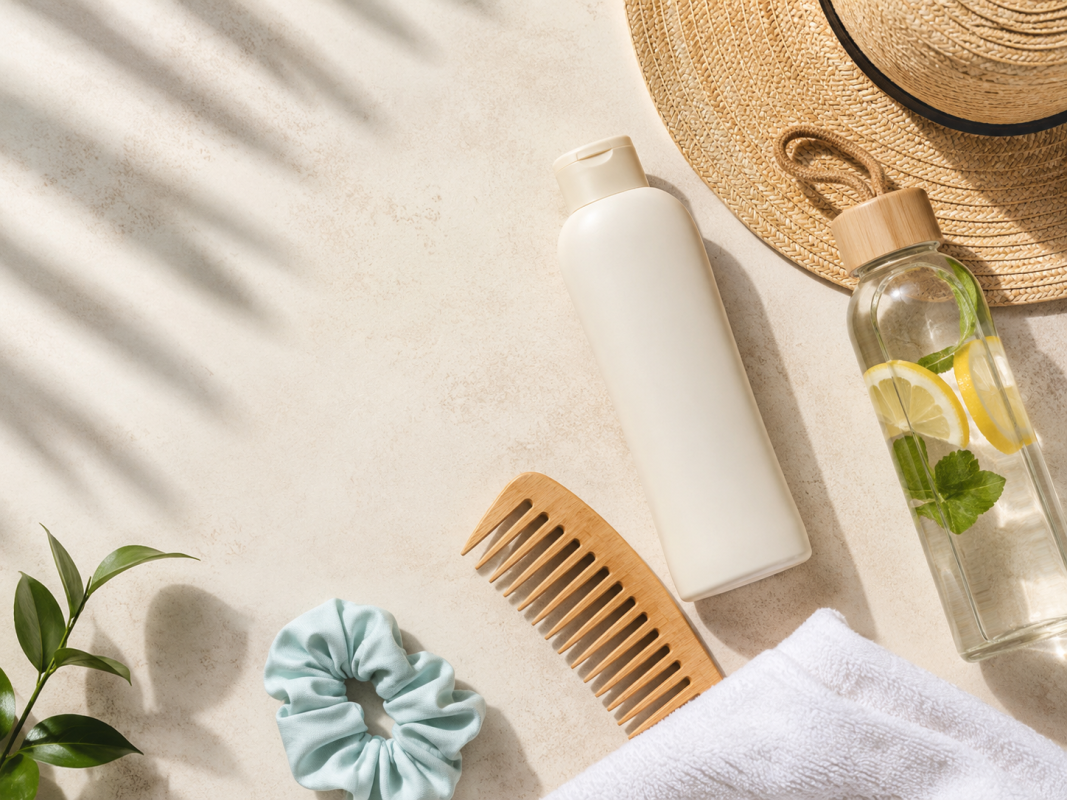
Use a hat or lightweight scarf when you are in strong sun for long periods. Rinse hair after swimming in pools or saltwater. Avoid tight hairstyles that pull on the hairline for hours. Choose gentle cleansing instead of harsh over-washing. Keep the scalp clean, but do not strip it. Hydrate well, especially in hot weather. If your scalp is exposed, consider asking a dermatologist about safe sun protection options for the scalp.
A Gentle Hair Support Routine You Can Try
A healthy hair routine is not about doing everything at once. It is about reducing unnecessary stress on the scalp and supporting the body’s natural rhythms.
Start with your scalp. Massage your scalp gently for one to two minutes using your fingertips, not your nails. This can help you become more aware of scalp tension and build a calming care ritual.
Next, look at your styling habits. If you often wear tight ponytails, buns, braids, or extensions, try alternating with looser styles. Give your hairline regular breaks from pulling.
Then look at daily recovery. Sleep, hydration, nutrition, and stress management all matter because hair follicles are living structures influenced by the body’s overall state. You do not need a perfect lifestyle. You need a steady one.
Finally, track changes gently. Take a photo of your part line or hairline once a month in the same lighting. This is more helpful than checking every day, which can create unnecessary worry.
Where Aha Halo Fits In
Aha Halo can be used as part of a broader wellness routine for people who want gentle energetic support for hair-related goals. It is not a replacement for medical care, nutrition, scalp care, or professional evaluation. Instead, it can become one supportive layer in a consistent routine.
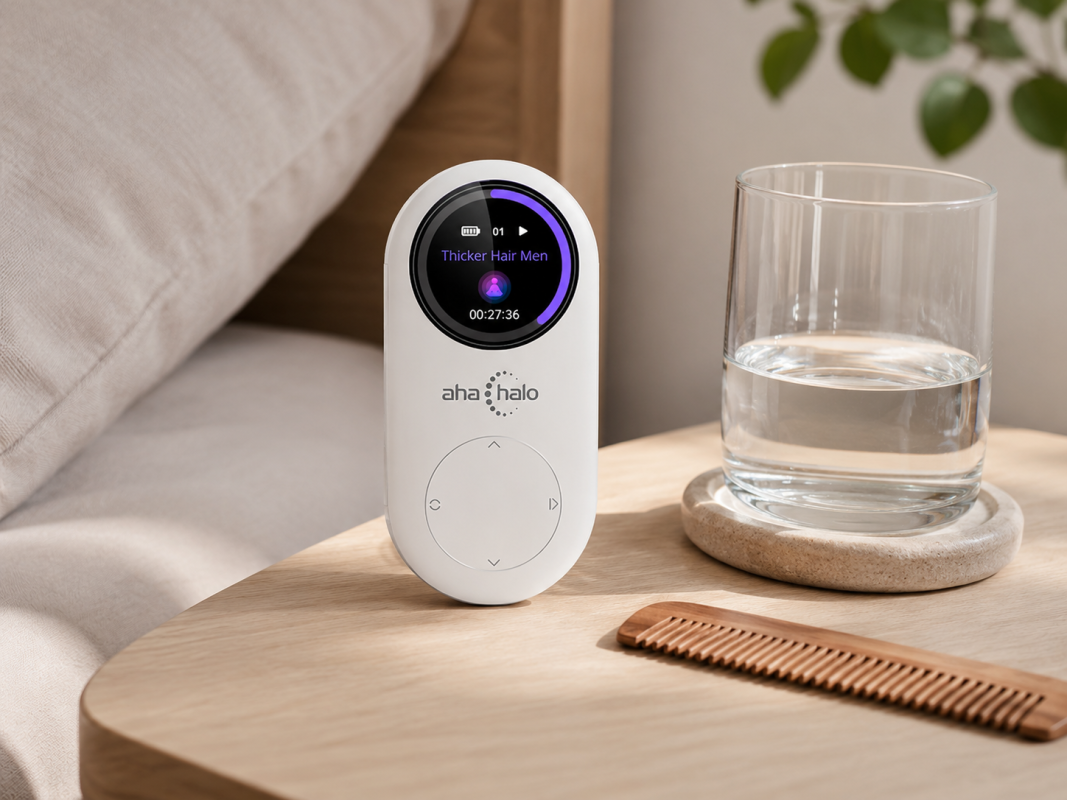
For women, Thicker Hair Women is designed to encourage women’s healthy hair growth patterns and adapt to lifestyle influences. This program may be a thoughtful choice for women who want to support their hair wellness routine through changing seasons, stress, hormonal transitions, or everyday lifestyle demands.
For men, Thicker Hair Men is designed to encourage men’s healthy hair growth patterns and adapt to lifestyle influences. This program may be a helpful option for men who want to support a consistent hair wellness routine as part of broader self-care.
A simple routine could look like this: choose the program that matches your needs, run it consistently as part of your evening or morning routine, and pair it with gentle scalp care, hydration, enough rest, and reduced styling tension. Consistency is usually more useful than constantly changing your routine.
Final Thoughts
Hair thinning can feel emotional because hair is closely tied to identity, confidence, and how we present ourselves to the world. But it is also a signal worth approaching with patience rather than fear.
Men and women may experience hair thinning differently, but both benefit from the same foundation: a healthier scalp environment, less unnecessary stress on the hair, better daily recovery, and support that fits real life.
Your hair care routine does not need to be complicated. It needs to be kind, consistent, and realistic.
