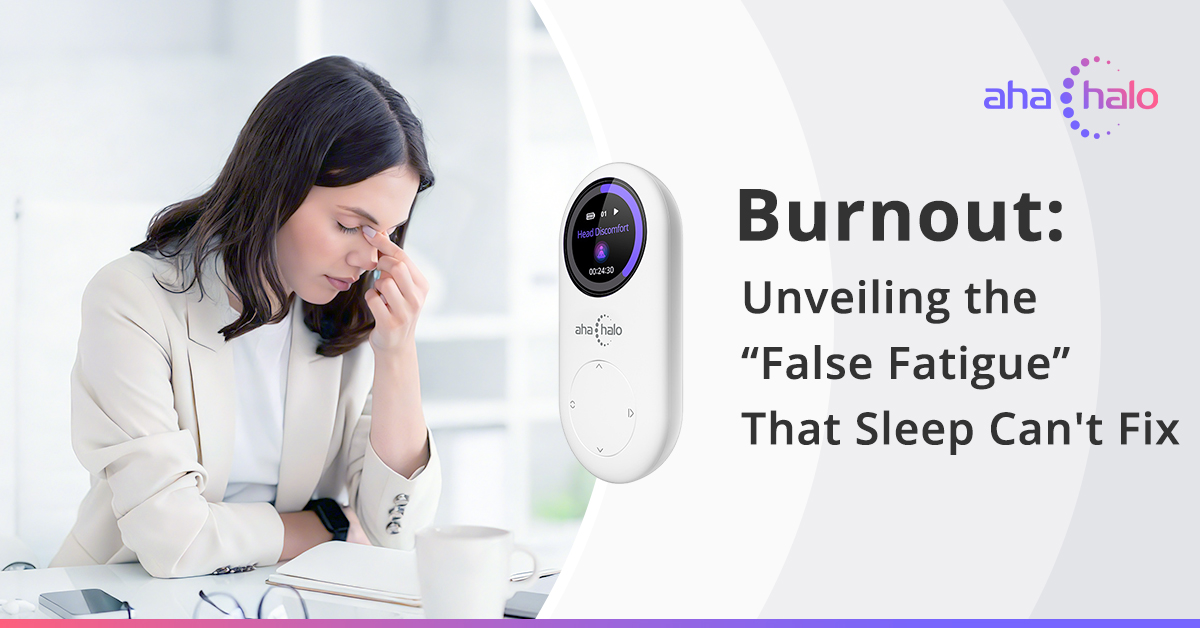
Burnout: Unveiling the “False Fatigue” That Sleep Can’t Fix
The Weekend That Didn’t Work
Imagine this: It’s Sunday night, and you’ve spent the last 48 hours doing exactly what the “wellness” guides tell you to do. You canceled your plans, turned off your notifications, and slept in until noon. By all accounts, you should be a beacon of energy. Instead, your head feels like it’s filled with lead, your limbs are heavy, and that low-level hum of anxiety hasn’t left your chest.
This is the “Zombie Weekend.” It’s the frustrating realization that you’ve “rested,” yet you feel more depleted than when you started. If this sounds familiar, it’s not because you’re lazy or “doing it wrong.” It’s because your body isn’t suffering from a lack of sleep—it’s suffering from a stalled nervous system.
The Secret Trap: Muscle Fatigue vs. Neural Fatigue
To understand why sleep isn’t helping, we have to distinguish between two very different types of exhaustion:
- Muscle Fatigue: This is what happens after a long hike or a gym session. Your physical resources are spent. The solution here is simple: food, hydration, and sleep.
- Neural Fatigue (The “False Fatigue”): This isn’t about physical energy; it’s about a “software” crash. When your brain is subjected to chronic stress, it enters a state of Burnout—a term that has migrated from the office into every corner of our lives.
When stress becomes a permanent background noise, your nervous system can enter a “Freeze State”. Think of your body like a high-end server. When it’s overloaded with too many background apps (stress, notifications, micro-decisions), it starts to overheat. Simply closing the lid (sleeping) doesn’t stop the internal fans from whirring or the processor from burning out. Your system is stuck in “Survival Mode,” and it has forgotten how to switch back to “Healing Mode.”
The Science of the “Freeze”
This isn’t just a feeling; it’s rooted in the Polyvagal Theory. Our nervous system has a “brake” and an “accelerator.” When the accelerator is pinned for too long, the system undergoes a protective shutdown. This “freeze” makes you feel numb, sluggish, and perpetually tired. You aren’t actually out of energy; your system has just “cut the power” to prevent a total meltdown.
The “Manual Restart” (The 5-4-3-2-1 Technique)
To break the freeze, you need to tell your brain—in a language it understands—that you are safe. This is where Grounding comes in. By forcing your brain to focus on immediate sensory input, you pull it out of the “overheated” background loops and back into the present moment.
Try this right now:
5 things you can see: A plant, a coffee mug, the texture of your desk.
4 things you can touch: The fabric of your shirt, your cool skin, the chair supporting you.
3 things you can hear: The hum of the AC, distant traffic, your own breath.
2 things you can smell: Faint perfume, the air after rain, or even just your lunch.
1 thing you can taste: The lingering flavor of mint or simply the neutral state of your mouth.Step 2: The “Deep System Reboot” with Aha Halo
While grounding is a fantastic “emergency brake,” long-term neural harmony requires a deeper reset of your stress response. When your brain is “overheating like a server,” frequencies can act as the “digital key” to unlock the system.
Aha Halo uses specific bio-resonance frequencies to support your body’s innate ability to balance itself. It isn’t a “cure” in the medical sense, but rather a Supportive Tool designed to encourage your body to shift from survival back to self-regulation.
Nerve: This is your system’s “tuner”. It helps maintain neural coordination and supports a balanced stress response. By aligning with these gentle waves, you invite your nervous system to “restart” its communication lines.
Vagus Nerve: Think of this as the “cooling fan” for your system. It supports gentle vagus nerve regulation, encouraging deeper relaxation, emotional ease, and whole-body harmony.
Building Your Digital Sanctuary
To truly escape the cycle of false fatigue, consistency is key. You can pair your grounding exercises with a curated “frequency menu” to maintain your resilience throughout the day:
- Daily Resilience: Use Relaxation I or Relaxation II during your breaks to manage daily tension and build gradual mental resilience.
- Releasing the Weight: If the fatigue feels like a permanent cloud, theChronic Fatigue (P) program is designed to assist in releasing the weight of persistent tiredness, fostering internal balance.
- The Mood Lifter: For those days when burnout leaves you feeling flat, the Feel Goodprogram encourages an awareness of positive emotions and natural contentment.
Expert Tips for a Total Recovery
Technology works best when it’s part of a holistic lifestyle. Here is how to optimize your “unfreezing” process:
- Hydrate Your Neurons: Always drink plenty of water while using Aha Halo to support your body’s natural adjustment processes.
- Respect the Dark: Aim for 7-8 hours of quality sleep and strictly avoid blue light exposure before bed.
- Eat for Energy: Focus on whole grains and dark leafy vegetables while cutting back on refined sugars that cause energy crashes.
- Follow the Natural Rhythm: Unless you are using sleep-specific programs like [Good Sleep], we recommend turning the device off at night to allow your body to restore its natural functions independently.
Rest is a Skill, Not a Luxury
The journey toward true wellness comes from within. Tools like Aha Halo aren’t meant to be “external supports” forever—they are the “training wheels” that help your body remember how to heal itself.
Stop waiting for sleep to fix a problem it didn’t cause. This evening, instead of just “lying there,” try the 5-4-3-2-1 technique, turn on your [Nerve] frequency, and give your brain a real chance to go offline.